
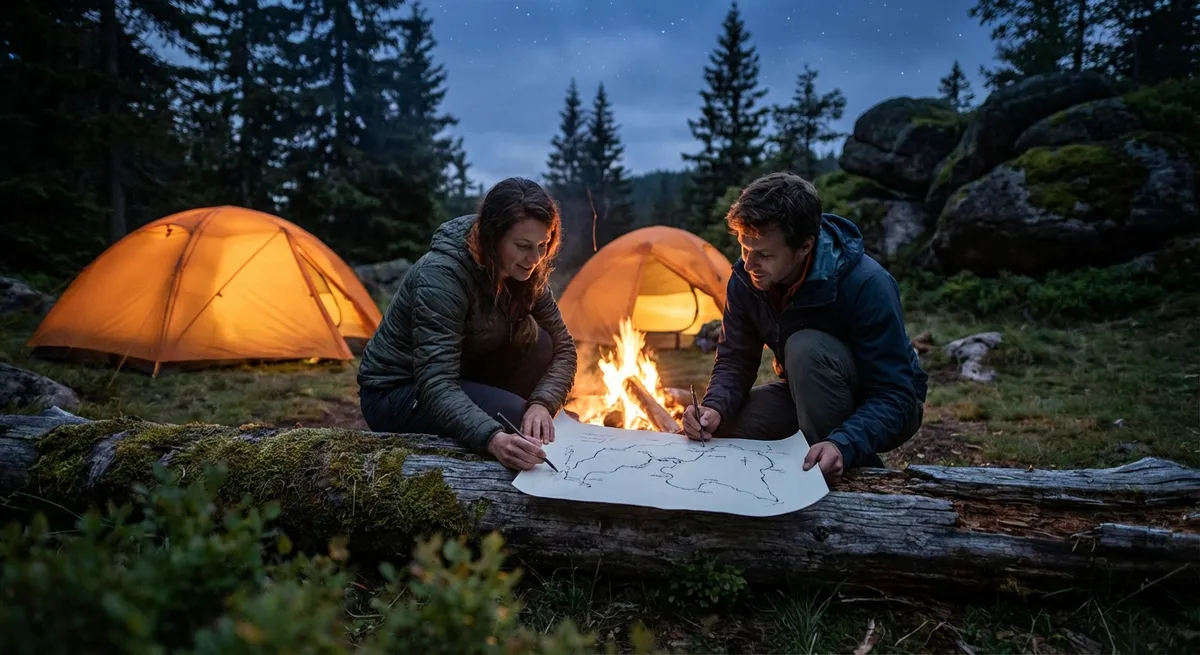
There’s a moment on every great camping trip when the world shrinks to the circle of your headlamp, the smell of pine and smoke hangs in the air, and tomorrow’s trail is nothing but a line of possibility in your mind. That’s the magic Pinecrest View lives for: not just pitching a tent, but crafting a weekend that feels like you discovered a secret map the guidebooks forgot. This is your field guide to building a camping escape that’s part hidden-gem hunting, part smart packing, and part choose-your-own-adventure itinerary.
Reading the Land: Choosing Camps That Tell a Story
The best campsites aren’t just coordinates; they’re chapters in a story you get to live.
Start by zooming out. Instead of asking “Where can I camp?” ask “What kind of weekend do I want?” A river where you can fall asleep to moving water? A ridge that catches sunrise like a stage light? A tucked-away forest hollow where the moss eats sound? Decide the feeling first, then hunt the spot.
Public land maps are your secret weapon. In the U.S., that might mean cross-referencing national forest or Bureau of Land Management (BLM) maps with satellite imagery. Look for thin blue lines (streams), contour lines that tighten (ridgelines and overlooks), and gaps in road networks where light pollution drops off. In Europe, regional nature parks and lesser-known municipal forests often hide primitive campgrounds just a bus ride beyond the tourist crush.
Watch for “second-row” locations: lake chains where everyone rushes to the big, named lake while the smaller, unpronounceable one next door has walk-in sites and loons for neighbors. Likewise, trailheads with tiny parking lots often lead to quieter corridors; you’ll trade convenience for solitude, and that’s usually a good bargain.
If you’re new to camping, don’t chase absolute remoteness right away. Look for campgrounds with a mix of drive-in and walk-in sites, potable water, and marked trails. Think of them as base camps where you can test your skills without betting the whole weekend on perfect navigation or weather.
Hidden Corners: Finding Underrated Camping Destinations
“Hidden gem” doesn’t have to mean “impossible to reach” or “secret gatekept spot.” It usually means “places people drive past on their way to somewhere more famous.”
Scan for regions that sit in the shadow of marquee parks. For example, forests that border national parks often share the same ecosystem and views with a fraction of the crowds and cost. A high plateau on the edge of a mountain range can give you massive skies, stargazing, and sprawling views without the brutal elevation gain.
Rivers often hide overlooked campgrounds at their bends and floodplains, especially where old rail lines or towpaths have become cycling and hiking routes. Old logging roads in managed forests can lead to sanctioned dispersed camping zones that feel genuinely wild yet remain legal and relatively accessible.
In coastal areas, skip the obvious beach-city campgrounds and push a little inland. Look for estuaries, salt marsh borders, or forested headlands with primitive sites and short connector trails to the ocean. You trade beachfront convenience for a richer blend of habitats—shore birds at sunrise, forest owls at night.
When researching, pay attention to what online reviews don’t mention. If everyone complains about “too far from town” or “not much cell service,” that’s often a green light for a certain kind of camper. Likewise, a campground with a plain, bureaucratic name might be a conservation success story with wildflower meadows and dark skies that don’t fit neatly into a marketing brochure.
Pack as a Pathfinder: Building a Camp Kit That Unlocks Terrain
Your gear shouldn’t be a collection of stuff; it should be a set of keys that open different types of weekends.
Think in layers of mobility. Your base layer is what you always bring: a reliable shelter (tent, tarp, or bivy), a sleep system rated for the coldest realistic night, a small stove or reliable fire-starting setup, and basic navigation tools (map + compass, plus offline digital maps). This baseline should be light enough that you never dread carrying it, even if plans change and you hike farther than expected.
The next layer is what lets you shape your trip’s personality. A compact hammock opens up forest lounging and creekside naps. Lightweight camp chairs transform a rocky riverbank into an evening living room. A collapsible water container means you can haul enough water to dry camps perched on ridges or tucked-away sites where streams vanish mid-summer.
Food is more than calories; it’s morale. Pack at least one meal that feels luxurious for the effort: ramen bulked out with real veggies and soft-boiled eggs, a pre-marinated packet of tofu or meat for a fast stir-fry, or a simple camp pizza made on flatbreads in a covered pan. Include a few “sprint snacks”—things you can eat while moving—so you’re not chained to long lunch breaks when the light is too good to waste.
Don’t skip the small, high-impact items: a bandana (towel, potholder, pre-filter), a compact headlamp with a red-light mode, a backup fire source, and at least one trash bag not just for leave-no-trace but also for emergency rain layering, dry storage, or makeshift groundsheet. These weigh almost nothing but can rescue a trip when plans collide with weather or terrain.
Itinerary Alchemy: Turning Two or Three Days Into a Mini-Expedition
A weekend doesn’t have to feel short if you design it like a micro-expedition rather than a rushed vacation.
Think in arcs: approach, immersion, and return. On day one, aim for a moderate approach—enough travel to shake off the week, not so much that you arrive at camp exhausted. Choose a first-night camp that’s easy to reach but feels removed, like a lakeside or forest clearing a short hike from the trailhead. This is your “settle in” night: dial in your setup, test your stove, let your body settle into camp mode.
Day two is for immersion. Wake a bit before sunrise and give yourself a slow, quiet start: a walk to the water, coffee with cold air on your face, or a short ridge scramble before breakfast. Then build a loop or out-and-back adventure from your base camp—a waterfall, hot spring, abandoned fire tower, or quiet meadow. Travel light with a daypack so that the miles feel like exploration instead of a chore. Plan a mid-afternoon “nothing block” back at camp where you deliberately have no agenda beyond reading, napping, sketching, or simply watching the light shift through the trees.
If you have a third day, make the return journey part of the adventure instead of a caffeine-fueled dash. Pack up early, then choose a slightly different route back—a riverside trail instead of a forest road, a detour to a viewpoint you skipped on the way in, or a side trip to a small town café where you can watch local life while your phone slowly reacquires a signal. The idea is to let your mind climb back to “everyday altitude” gradually, not snap back to it in a parking lot.
If weather or energy dips, have a “Plan B loop” ready: a shorter alternative hike, a low-elevation forest walk when the peaks are socked in, or a fire road ramble you can do in sandals when your boots raise blisters. Good itineraries bend rather than break.
Little Rituals That Make Camp Feel Like a Place, Not a Pit Stop
Camping is more than logistics; it’s about creating a temporary home stitched to a particular piece of earth.
When you arrive, walk the immediate area for five minutes before setting up anything. Notice which way the wind is moving, how water would flow if it rained, where the ants are busy, where the land naturally invites you to sit. Pitch your shelter where it respects the place: off fragile vegetation, away from stream banks, out of the downhill path of overnight runoff.
Establish small stations that make camp life smoother: a “kitchen rock” or log where stove and food live, a “gear tree” where packs and jackets hang, and a tidy fire ring only if fires are permitted and responsible in that environment. This small structure turns random gear piles into a camp that feels intentional and easy to manage in the dark.
Add one sensory ritual that tells your brain, “We’re here.” It might be brewing a specific tea only on camping trips, journaling the day by headlamp, drawing a rough map of your surroundings, or taking a short, barefoot lap around camp to feel the ground’s temperature and texture. Over time, these rituals become anchors you look forward to as much as the view.
At night, dim your world. Switch your headlamp to low or red mode so the stars have a chance to reveal themselves. Let the sounds of insects, wind, and distant water fill the space where phone notifications used to be. Before you crawl into your sleeping bag, take one last 360-degree look around camp and memorize it; this is your tiny outpost on the planet for the night.
Wild Etiquette: Moving Through Places Without Leaving a Scar
Adventurous camping isn’t just about finding wilder spots; it’s about leaving them untouched enough that someone else can feel the same sense of discovery.
Treat official guidelines—whether national park rules, national forest regulations, or local bylaws—as your minimum standard, not the goal. Camp on durable surfaces, at least 200 feet from lakes and streams where required, and use existing fire rings or skip fires entirely when conditions are dry, windy, or restricted. If you’re in a high-use area, consider being the person who doesn’t have a fire that night; sometimes the wildest thing you can do is let the darkness be dark.
Plan for waste disposal as deliberately as you plan your meals. Pack out all trash, including food scraps and micro-litter like twist ties, tea bag tags, and plastic seals. If you’re in a place where catholes are permitted, dig them 6–8 inches deep and well away from water sources, and understand when packing out human waste is the better—or required—choice. In especially fragile environments (desert canyons, alpine tundra, narrow river corridors), following local guidance on waste isn’t optional if you want those places to remain viable.
Silence and sound matter too. Sing around the fire if you like, but keep the noise from carrying far into the night. Let birdsong, river rush, and wind occupy the soundscape more than your playlist. When you meet others on trail or at camp, friendliness and a simple nod go a long way, but remember that many people come outdoors precisely for the quiet.
In the end, the mark of a seasoned camper isn’t how extreme their trips look on social media, but how little trace they leave behind in the actual places they move through.
Conclusion
A great camping trip isn’t a product you buy; it’s a story you assemble from maps, weather, curiosity, and a backpack full of carefully chosen tools. When you read the land, seek out those second-row wild places, pack as if you’re unlocking terrain rather than flexing gear, and shape your weekend with intention, even two nights under canvas can feel like a genuine expedition. The trails, lakes, and ridges are there whether you visit or not—but when you do, you get to stitch them into your own personal atlas of wild weekends, one campfire at a time.
Sources
- U.S. National Park Service – Camping & Overnight Stays - Overview of camping options, regulations, and trip-planning basics on U.S. public lands
- Leave No Trace Center for Outdoor Ethics – Seven Principles - Authoritative guidelines on low-impact camping and responsible outdoor behavior
- U.S. Forest Service – Dispersed Camping Guidelines - Practical information on finding and using dispersed campsites on national forest land
- DarkSky International – Light Pollution Basics - Explains why remote, low-light areas are valuable and how campers can help protect dark skies
- REI Co-op Expert Advice – How to Choose a Campsite - Detailed tips on selecting safe, comfortable, and environmentally sound campsites