
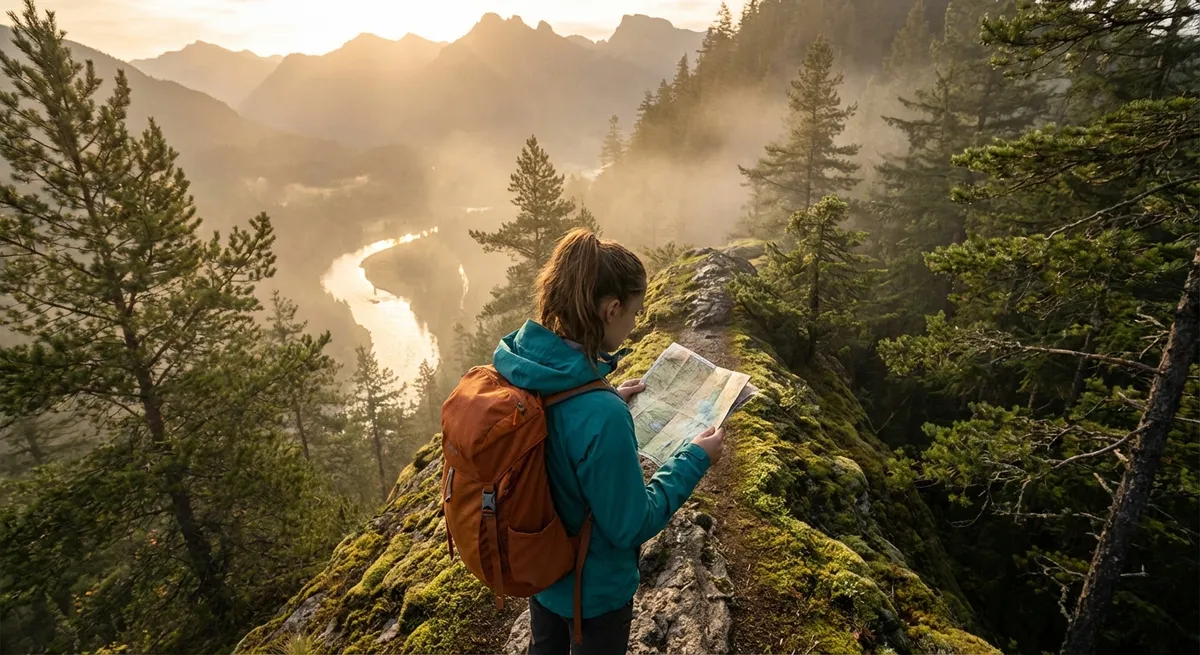
Hiking isn’t just walking in nature—it’s stepping into a living story. The crunch of pine needles under your boots, the cool shock of alpine air, the way the light filters through the trees at golden hour—these are the moments that pull us away from screens and back into something real. Whether you’re a first–time day hiker or a seasoned trekker chasing your next big summit, this guide will help you find hidden gem trails, pack smart, and shape an itinerary that turns “just a hike” into a mini–adventure worth sharing.
Finding Hidden Gem Trails (Without Crowds)
The best hikes usually aren’t the first ones that pop up on a tourist brochure—and that’s exactly the point. To uncover quieter, more magical trails, you need to dig a little deeper and read between the lines.
Start with local sources. Instead of searching only “best hikes near [city],” try phrases like “less crowded hikes,” “local favorite trails,” or “forest service trail maps near [region].” Check regional tourism boards, local hiking clubs, and park service websites; these often highlight lesser–known routes that don’t make it to big, mainstream lists.
Next, learn to read trail reviews like a local scout. When people complain about “too many switchbacks” or “no cell service,” that often means you’ve found a real adventure, not a paved promenade. Look for reviews that mention wildflower meadows, ridge walks, lakes tucked into cirques, or “unexpected viewpoints”—these are clues that the trail offers more than a simple out-and-back slog.
Aim for shoulder hours and shoulder seasons. Sunrise or late-afternoon starts, plus hiking in late spring or early fall, dramatically increases your chances of solitude. Trails near popular lakes or viewpoints often have alternate approaches—longer, but quieter—that intersect the same main sight with a fraction of the crowds.
Finally, consider adjacent regions. If a national park is overrun, look just beyond its borders. National forests, state parks, and local preserves often share the same ecosystem and views, but with more flexible rules, backroads trailheads, and space to breathe. The vistas can rival the famous spots—with none of the tour bus chaos.
Essential Gear: Packing Smart for Day Hikes and Overnights
The difference between a dream day on the trail and a survival story often comes down to what you packed. You don’t need the fanciest gear, but you do need the right basics, chosen with intention.
For any hike—short or long—start with the “big five”: footwear, backpack, navigation, layers, and hydration. Invest in comfortable, broken-in hiking shoes or boots with decent grip. Blisters can ruin a trip faster than bad weather. Your backpack should have a hip belt and sit snugly against your back, not swinging like a loose pendulum. Aim for 15–25 liters for day hikes and 35–55 liters for light overnights.
Navigation matters even on popular trails. Download offline maps to your phone (and carry a paper map if you’re heading into remote areas). Don’t rely on cell service; treat it as a bonus, not a lifeline. Simple skills—knowing which way the sun moves, recognizing key landmarks—can keep you oriented when tech fails.
Pack layers like you’re preparing for three seasons in one day: a moisture-wicking base layer, an insulating midlayer (like a fleece or puffy jacket), and a lightweight waterproof shell. Even in warm climates, higher elevations and changing weather can drop temperatures suddenly.
For hydration, carry at least 0.5–1 liter of water per hour of moderate hiking, more in heat or altitude. A soft flask or hydration bladder makes sipping easy, and a compact water filter or purification tablets let you safely refill from streams if needed. Toss in snacks that don’t crumble into dust—trail mix, nuts, jerky, energy bars, and fruit leather—foods you can eat on the move without needing cutlery or a table.
Don’t forget the quiet heroes of your pack: a headlamp (with extra batteries), sunscreen, a small first-aid kit (with blister care), a light emergency blanket, and a simple multi-tool. These weigh almost nothing but can turn a stressful situation into a manageable inconvenience.
Hidden Gems: Trail Ideas Beyond the Usual Bucket List
The joy of hiking isn’t just in tagging the “famous” peaks—it’s in stumbling onto places that feel like secrets whispered by locals. While you should always check conditions and rules before you go, here are the types of hidden gems worth seeking out in your region:
- Ridge-line rambles: Instead of heading straight to the lake everyone knows, look for trails that follow a nearby ridge. These often provide continuous panoramic views, fewer crowds, and an ever-changing perspective of the valley below.
- Abandoned fire lookout routes: In many mountain regions, old fire lookout towers or their foundations sit atop lonely peaks. Trails that lead to them tend to be steep, but the reward is a 360-degree view and a tangible piece of history. Check forest service or park websites for maintained or unofficial routes.
- Waterfall link-ups: Rather than a single waterfall viewpoint, look for loop trails or connecting paths that visit several falls on the same river system. The hike becomes a moving gallery of cascades, each with its own character and photo-worthy angle.
- Alpine meadows and shoulder summits: Lesser-known “shoulder peaks” next to a famous summit often offer almost identical views with a fraction of the foot traffic. Look at topographic maps: those smaller, rounded peaks beside big-name mountains can be spectacular.
- Urban escape corridors: Even if you live in a city, look for river greenways, canyon parks, or hillside preserves with interconnected trails. You might be able to stitch together a 10-mile day hike via stairways, park paths, and ridge trails without ever getting in a car.
Use this as inspiration and then drill down locally. Search specific phrases like “fire lookout hike near [region]” or “alpine meadow trail in [mountain range].” Cross-check details on official park or forest pages to confirm access, recent closures, and safety notes.
Crafting a One- or Two-Day Hiking Itinerary
Instead of treating each hike as a standalone outing, design it as part of a mini–escape. With a bit of planning, a single weekend can feel like a full-blown adventure.
For a one-day itinerary, pick a trail that matches your fitness level but still feels like a stretch—something with a standout feature: a summit, a lake, or a dramatic overlook. Start early, aiming to hit the trailhead at or just before sunrise. The morning light is softer, wildlife is more active, and you’ll often have the trail mostly to yourself.
Build in “linger time.” Choose a turnaround point with a reason to stay: maybe a ridge with a broad rock slab where you can lay out a simple trail picnic; a lakeshore where you can soak your feet; or a meadow where you can just listen to the wind. Plan at least 30–45 minutes there, instead of rushing to tag the point and leave.
For a two-day outing, stage your experience. Day one can be a moderate hike to a scenic campsite or a nearby town or lodge. Day two can be your “big hike” day. This structure gives your body time to adjust, especially if you’re changing altitude, and it builds narrative: approach, summit, return.
Think about themes for your itinerary: a “water weekend” built around a river canyon hike and a lakeside trail; a “ridge & forest” combo with one high-elevation route and one shaded, mossy trail; or a “sunrise & stars” trip where you hike to a viewpoint pre-dawn one day and stay out for stargazing the next.
Always account for buffer time on both ends—an extra hour to get lost finding the trailhead, to explore a side spur to an unexpected viewpoint, or to simply sit and watch the clouds change. The most memorable moments often aren’t in the plan.
Safety, Stewardship, and Trail Etiquette
Adventure is only fun when you get home safely—and leave the place better than you found it. A few simple habits help protect both you and the landscapes you love.
Before you go, check official park or forest service sites for trail closures, fire restrictions, and wildlife advisories. Weather can turn a pleasant walk into a dangerous situation fast, especially in mountains and desert regions. If thunderstorms are forecast, avoid exposed ridgelines and high summits during peak storm hours.
Tell someone your plan: where you’re hiking, which trailhead you’re using, who you’re with, and when you expect to be back. Share a screenshot of your route. If plans change mid-trip, send an update whenever you regain reception.
On the trail, follow Leave No Trace principles: pack out all trash (including food scraps and tissue), stay on established trails to prevent erosion, and avoid shortcuts on switchbacks. Resist the urge to carve initials into trees, build rock stacks, or pick wildflowers—these small acts, multiplied by thousands of visitors, degrade the very beauty we came to see.
Respect wildlife with distance. Use a zoom lens or binoculars instead of walking closer, and never feed animals. Human food changes their behavior and can make them aggressive or sick. In bear country or other sensitive habitats, follow local guidelines strictly: bear canisters, proper food storage, and noise in dense brush when appropriate.
Finally, be a good neighbor to other hikers. Yield to uphill traffic, step aside when taking photos, keep voices and music low, and offer a friendly greeting on narrow sections. The collective mood on a trail is contagious; a little kindness goes a long way toward making the shared experience feel welcoming and wild in the best way.
Conclusion
Hiking trails are more than lines on a map—they’re invitations. To watch fog lift off a valley as the day wakes up. To stand on a ridge you’ve earned with every step. To discover hidden routes that don’t yet have their own hashtag. With a bit of research, thoughtful packing, and a flexible itinerary, you can turn any free day or weekend into a story you’ll want to relive—and share—again and again.
Pick a map, pick a trail, and step into the next chapter. The path is waiting.
Sources
- National Park Service – Hiking Basics - Covers fundamental safety, planning, and gear advice for hikers of all levels
- Leave No Trace Center for Outdoor Ethics - Details the 7 Leave No Trace principles for minimizing impact on trails and wild places
- American Hiking Society – Hiking 101 - Provides beginner-friendly guidance on preparation, packing, and trail etiquette
- U.S. Forest Service – Know Before You Go - Offers official information on conditions, regulations, and trip planning for national forests
- REI Co-op Expert Advice – Day Hiking Checklist - Practical, gear-focused checklist to help you pack effectively for day hikes